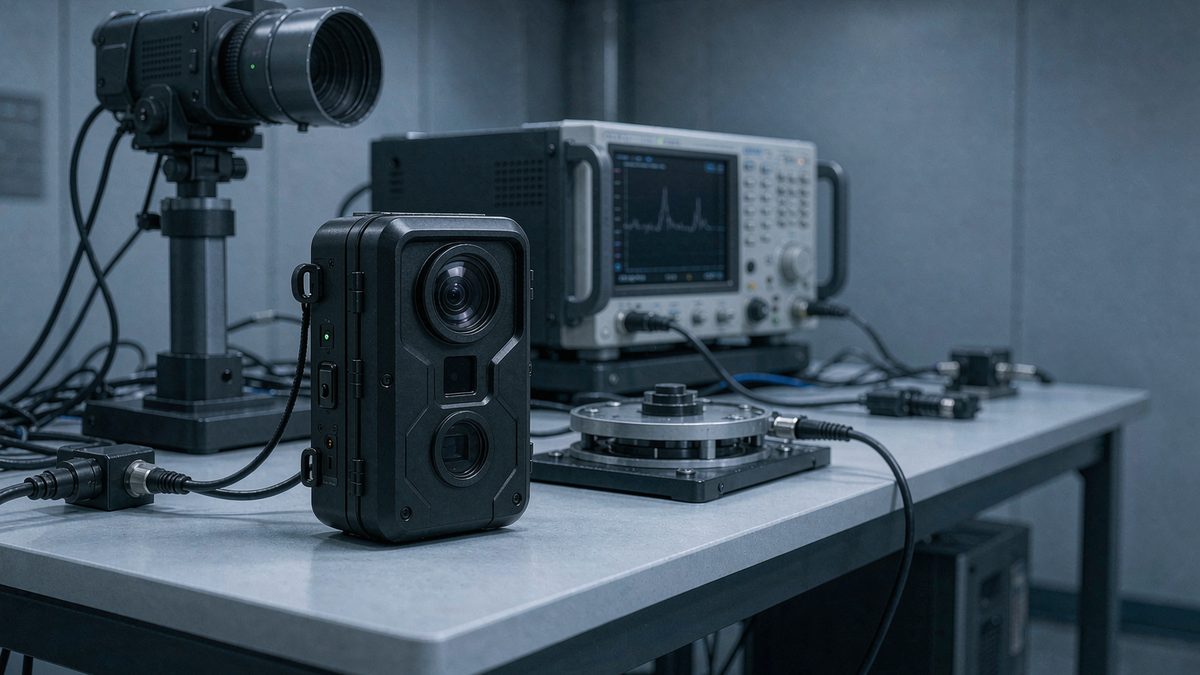
Image stabilization is arguably the single most important video feature on an action camera, more important than resolution for most use cases.
Electronic Image Stabilization (EIS):
- Software-based — the camera crops into the sensor slightly and shifts the crop window frame-by-frame to counteract shake
- Standard on almost all action cameras today
- Effective for moderate vibration (walking, slow cycling, gentle vehicle movement)
- Drawbacks: crops the field of view (usually 5–15%), may produce artifacts on rapid shaking, less effective in low light
Optical Image Stabilization (OIS):
- Hardware-based — the lens or sensor physically moves to counteract shake
- Rare on action cameras (most are EIS-only)
- No crop penalty, works better in low light
- Adds cost, size, and weight
The stabilization tiers on the market in 2026:
- Basic EIS (sub-$100 cameras): Reduces small-amplitude shake; expect visible wobble on rough terrain
- Good EIS ($100–$200): Handles road cycling, hiking, and moderate off-road well
- Advanced EIS (GoPro HyperSmooth, DJI RockSteady, Insta360 FlowState): Near-gimbal smoothness even on mountain bike trails and motorcycle handlebars
If you do one sport: Motorcycle riding, mountain biking, or running — buy the best stabilization you can afford. It matters more than the resolution spec.