

Trail Camera Certification Guide: CE, FCC and What Your Market Requires
Why certification decides whether your shipment clears customs
You can have the best trail camera at the best price, and it still means nothing if the shipment is held at customs, delisted by Amazon, or rejected by a distributor who checked your paperwork and found gaps. For radio-equipped products like 4G and WiFi trail cameras, certification is not an afterthought — it is part of the product.
This guide maps out which certifications a trail camera needs for the major markets, what exactly gets tested inside the camera, how to verify a supplier’s documents, and what level of support you should expect from your manufacturer. It is written for importers, brand owners and distributors; the companion article on choosing a trail camera manufacturer covers the broader factory evaluation.
Certification map by target market
| Market | Mandatory marks | Radio-relevant rule |
|---|---|---|
| United States | FCC | Part 15 (unintentional + intentional radiators); cellular modules need an FCC ID grant |
| European Union | CE | RED 2014/53/EU (radio), EMC, RoHS 2011/65/EU |
| United Kingdom | UKCA | UK radio equipment regulations (mirrors RED) |
| Canada | ISED (IC) | RSS standards; cellular module certification |
| Australia / NZ | RCM | ACMA radio communications rules |
| Mexico / Brazil | NOM / Anatel | Anatel is mandatory for any device with WiFi/4G |
Note the pattern: every market has its own regime for the same physical test areas — radio spectrum, electromagnetic compatibility, safety and chemicals. A well-engineered camera platform is designed once with all of these in mind, which is why experienced manufacturers pre-select radio modules that already carry multi-market grants.
What inside a trail camera triggers testing
A trail camera is classified as radio equipment because of what’s inside it:
- The cellular module (4G LTE) — the biggest certification driver. Reputable module vendors (Quectel, Fibocom, SIMCom and similar) hold FCC ID and CE RED certifications for the module itself, which dramatically reduces the cost and time of certifying the finished camera.
- WiFi and Bluetooth — intentional radiators under FCC Part 15C and RED, even in WiFi-only models.
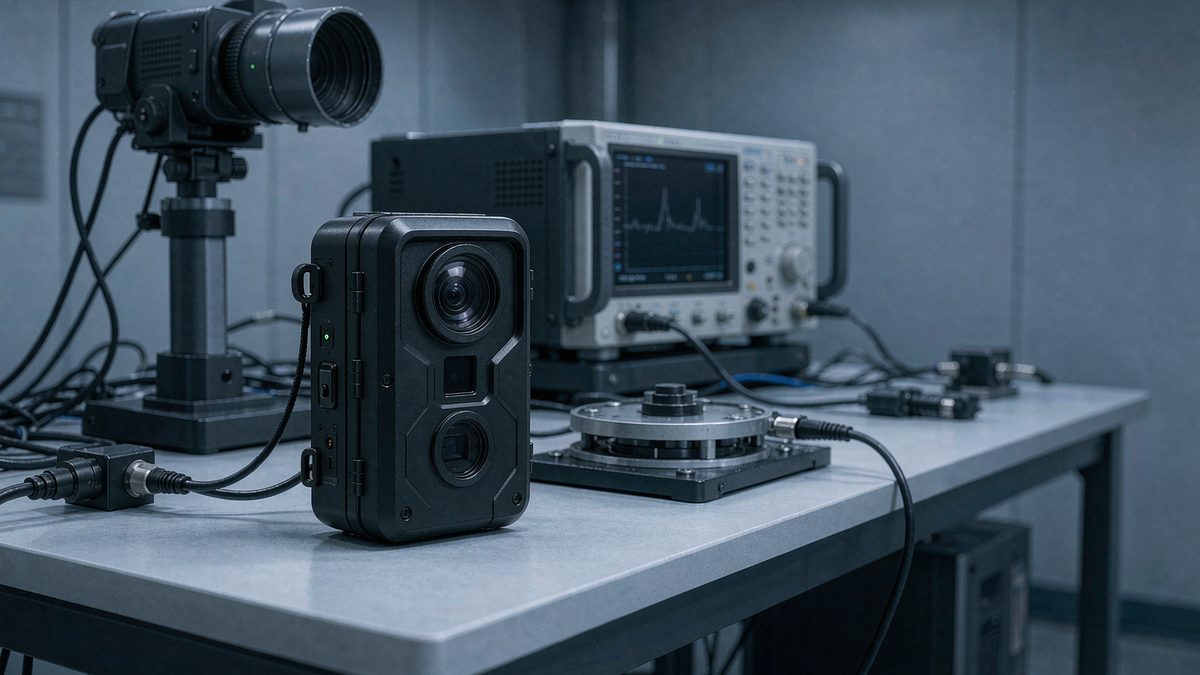
- The mainboard as an unintentional radiator — clocks and digital circuitry must pass emissions limits (FCC Part 15B / EMC standards).
- The battery — lithium cells need UN38.3 transport testing and, for the EU, battery directive compliance; solar charging circuits add safety considerations.
CE in practice
For trail cameras sold in the EU, the umbrella is the Radio Equipment Directive (RED 2014/53/EU), which absorbs the older EMC and safety requirements for radio products. In practice you should receive:
- Declaration of Conformity (DoC) — the manufacturer’s own signed declaration listing the directives and harmonised standards applied.
- Test reports from the radio, EMC and (where applicable) safety testing, ideally from an accredited lab.
- Technical file — construction documentation, test results, and the module’s own certifications.
Most consumer radio products can be self-declared against harmonised standards without a Notified Body — but cellular devices often rely on the module’s grants plus integration testing. If a supplier cannot produce the module grant number and their own DoC, treat it as a red flag.
FCC in practice
For the United States:
- FCC Part 15B covers unintentional emissions from the mainboard.
- FCC Part 15C / modular approval covers WiFi and Bluetooth; the radio module’s FCC ID should be printed on the module and referenced in your documentation.
- Cellular cameras must use an LTE module with its own FCC ID grant, and the finished product must comply with the grant’s conditions.
You can verify any FCC ID free of charge in the public FCC equipment authorization database. If a supplier quotes an FCC ID that doesn’t resolve to their product, walk away.
RoHS, batteries and shipping documents
Two non-radio items routinely delay first shipments:
- RoHS (EU) — restricted substances in solder, cables, paints and plastics; a report per homogeneous material, refreshed when the BOM changes.
- UN38.3 + MSDS — mandatory for shipping lithium batteries by air or sea. Without these, forwarders will refuse the booking, whatever your customs status is.
How to verify a supplier’s certificates
- FCC: search the FCC ID in the official equipment authorization database — confirm the grantee name, module and product photos.
- CE: ask for the DoC and at least the radio test report; check that the lab name is real and the product description matches your model. Beware of “CE certificates” sold as PDFs — CE is a self-declaration backed by a technical file, not a certificate someone emails you.
- Consistency check: the model name, radio module and photos in the reports must match the camera you are buying. Mismatched paperwork is how shipments get stuck.
What your manufacturer should do for you
A manufacturing partner should hand you a compliance package with every project: test reports, DoC copies, module grant numbers, label artwork guidance (FCC ID and CE mark placement), and UN38.3/MSDS for the battery configuration you ordered. If you enter a new market, they should tell you which additional approvals (RCM, Anatel, ISED) apply before you order, not after.
This is how we work with OEM/ODM partners at GrandVision — certification support is part of the product development process, not an upsell. If you are planning a trail camera line for a specific market, talk to our team and browse the trail camera series — including 4G solar models built on LTE modules with multi-market grants.
Frequently asked questions
Do WiFi-only trail cameras need FCC/CE certification?
Yes. WiFi is an intentional radiator; WiFi-only models still need FCC Part 15C/15B compliance for the US and RED compliance for the EU — just without the cellular module grant layer.
Who is legally responsible for CE marking — the factory or the importer?
Both, in different ways. The manufacturer issues the DoC and technical file; the importer is responsible for only placing compliant products on the EU market. In practice, make sure your agreement names who holds the technical file.
Can I use my supplier’s test reports for my own customs clearance?
Yes — reports and DoC are transferable as evidence of conformity as long as the product and model match. Keep copies with your shipping document set so customs or marketplace reviews can be answered in hours, not weeks.