

Hunting Season Is Coming: 7 Questions Hunters Ask (Answered)
Opening day is closer than you think. The hunters who fill their tags every year are the ones who start scouting now — and a good trail camera is the scout that never sleeps. Add a digital night vision device and you can keep watching long after dark. Before you head into the woods, here are the questions hunters ask us most every fall, answered with real specs from our 2026 lineup.
1. No-Glow or Low-Glow IR?
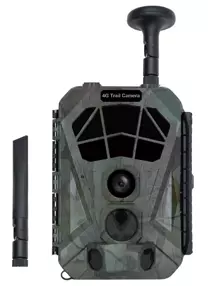
Low-glow (850 nm) LEDs give brighter night shots but show a faint red pinprick; no-glow (940 nm) is completely invisible. On pressured public land, go no-glow: the HG200 4G pairs a 940 nm no-glow flash with a 0.2 s trigger and 3 PIR sensors covering 110° — the buck never knows it’s there.
2. How Fast Does the Trigger Need to Be?
Anything slower than 0.4 s risks catching the tail end of a walking buck. Look for 0.2–0.3 s trigger speeds and a wide PIR detection angle, so animals entering the edge of the frame are picked up before they cross it.
3. Will the Batteries Survive a Cold Season?
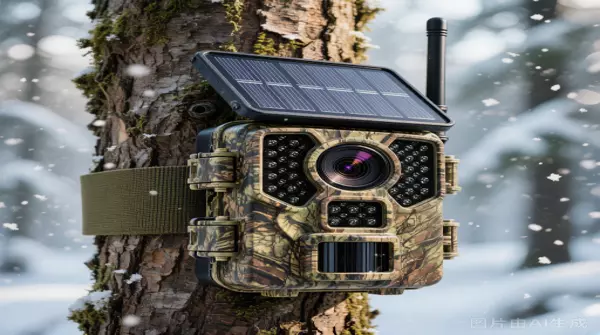
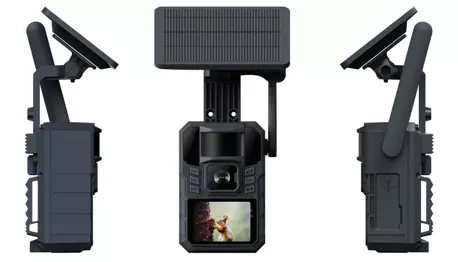
Cold mornings are hard on batteries, and swapping them mid-season spooks the woods. Solar earns its keep here: the HC30C 4G Solar tops itself up continuously for up to 12 months of standby — enough to run the entire season without a single battery change.
4. There’s No WiFi in the Woods — Now What?
You don’t need WiFi, you need cellular. 4G trail cameras send photos and video straight to your phone over the same network as your mobile — no card pulls, no long hikes to the camera. That’s exactly what outfitters running multiple distant properties rely on during the season.
5. Where Should Cameras Go?
Mount at 3–4 feet on travel corridors, funnel pinch points, and food plots, and keep the lens out of direct east/west sunlight to dodge false triggers. On big open fields, walk-in checks do more harm than good — put a camera with a time-lapse mode on the treeline and let it watch the whole field without a single intrusion.
6. Can It Really Stay Out Unattended?
Yes, if it’s built for it: IP66 sealing against season-long rain and dust, 512 GB card support so nothing gets overwritten, and solar or high-capacity power. Hang it in September, pull the card after the season.
7. What About Seeing in the Dark Yourself?
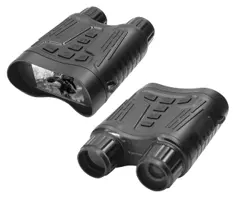
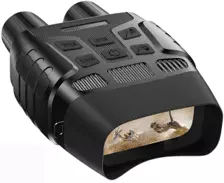
Trail cameras tell you where game was — night vision shows you what’s moving right now. For after-dark predator control (coyote and hog seasons run at night in many states), pre-dawn scouting walks, or simply glassing a food plot at last light, today’s digital night vision is sharper and far more affordable than the old gen tubes. The NV2180 4K Binocular records everything you spot in 4K, so you can review the field the same way you review camera cards.
The NV3180 Digital Monocular is the pocket-size companion: one-hand glassing along trails and creek crossings, with photo and video capture built in.
Want deeper answers — rut patterning, sound attractants, sample requests? Check our full hunting-season FAQ. We’re GrandVision, an OEM/ODM factory for trail cameras and night vision devices with MOQ from 100 units, samples in about a week, and full OEM branding. Talk to us before your season starts.