Motion blur is the most common cause of inconsistently sharp images.
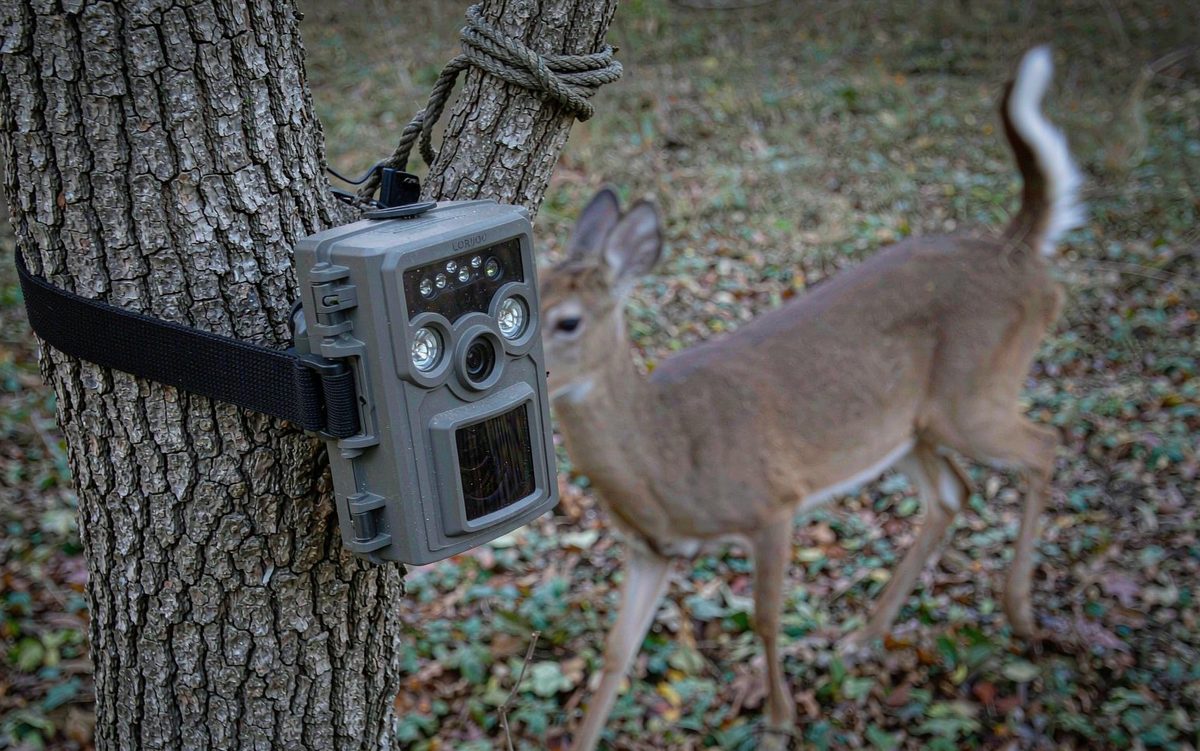
Night photos are blurrier than day photos. This is normal physics. At night, the camera needs a longer exposure time to gather sufficient light — even with IR illumination. During that longer exposure, a moving animal creates motion blur. Fast-moving animals (running deer, flushing birds) are most affected.
Solutions:
• Use a camera with a faster shutter speed at night — check the specification for minimum night shutter speed
• Switch to full-color LED night illumination, which provides more light and allows shorter exposure times
• Position the camera to capture lateral movement (crossing the frame) rather than direct approach — lateral motion in the frame axis creates less apparent blur than subjects moving toward the lens
Rain can cause blur — rain drops falling through the IR illumination cone scatter light and appear as white streaks or haze across the frame. This is not a camera defect. In persistent rain, most experienced hunters pull cameras or accept reduced image quality during wet periods.